The 2026 US-Canada Tariff Playbook: What's Taxed, What's Spared, What's Next
Canada dropped its counter-tariffs on CUSMA-covered U.S. goods on September 1, 2025, but kept them on steel, aluminum and autos. What that means for grocery prices.
Update, October 2026: this guide reflects trade policy as of April 2026. Canada has since put new counter-tariffs on $27.6 billion of U.S. goods, including dairy products and honey, effective September 8, 2026. Check the current list before you rely on the details below.
Canada and the U.S. moved into openly tariffed trade in early 2025. By fall 2025 the picture had shifted again: Canada removed its counter-tariffs on U.S. goods covered by CUSMA, including food and beverages, effective September 1, 2025, and kept its tariffs on steel, aluminum and autos.
For Canadian grocery shoppers in 2026, the direct food-tariff hit has eased. Indirect pressure through upstream costs and policy uncertainty is still here.
Here's what that means at the shelf: what's been removed, what's still in place, and how to read the next round of trade headlines without panic-buying.
The short version (as of April 2026)
- Canada removed its counter-tariffs on U.S. food and beverages effective September 1, 2025. That ended the most direct grocery tariff exposure from early 2025.
- Canada's remaining counter-tariffs cover U.S. steel, aluminum and autos. These aren't grocery categories, but they affect packaging, refrigeration, transport equipment and manufacturing inputs.
- The U.S. still tariffs Canadian steel, aluminum, autos and lumber. Its Section 232 tariffs run from 15% to 50% on steel and aluminum, 25% on autos (with U.S. content in CUSMA-compliant vehicles exempt) and 10% on softwood lumber. That creates wholesale volatility that reaches Canadian prices indirectly.
- Pass-through to shoppers is uneven. A 1 kg jar of peanut butter, a 2025 counter-tariff target, averaged $5.57 in February 2026, flat from a year earlier. Orange juice, another target, was up 7% (Statistics Canada).
In 2026, tariffs reach your grocery bill mostly through packaging, freight, uncertainty and a few high-friction categories. Knowing which is which is most of the battle.
What the official Canadian policy says now
In August 2025, the Prime Minister announced that Canada would remove "all of Canada's tariffs on U.S. goods specifically covered under CUSMA" on September 1, and would "retain our tariffs on steel, aluminum and autos".
The Government of Canada publishes a complete list of U.S. products still subject to counter-tariffs. Check it for any specific product category.
What remained after September 1, 2025:
- Steel: Canadian counter-tariffs on U.S. steel.
- Aluminum: Canadian counter-tariffs on U.S. aluminum.
- Automobiles: Canadian counter-tariffs on U.S. autos.
What was removed: the 25% counter-tariffs on the March 4, 2025 list of U.S. consumer and food products, and on the other non-steel, non-aluminum goods added later (SOR/2025-181).
So the direct grocery tariffs from early 2025 came off in fall 2025. The trade environment isn't calm, and prices didn't snap back. But Canada is no longer taxing U.S. peanut butter and orange juice at the border.
Where grocery effects still come from
With direct food tariffs removed, trade policy reaches Canadian grocery prices through indirect channels.
Packaging and manufacturing inputs
Steel and aluminum go into cans, lids, closures, drink containers and food-processing equipment. When those inputs are taxed at the border, food manufacturers absorb some of the cost and pass some along through wholesale prices. Canned soups, drinks, pet food and shelf-stable packaged goods are the most exposed.
Transportation and logistics equipment
Canada's remaining counter-tariffs on U.S. autos can add to the cost of the vehicles that move groceries from distribution centres to stores. That raises the cost of getting food to shelves, which eventually shows up in wholesale prices.
Wholesale uncertainty and risk premiums
Even when specific goods aren't tariffed, importers and wholesalers can price in a buffer against future tariff changes. It isn't a line item on any invoice, and it tends to last as long as policy stays unpredictable.
Currency
Trade tensions move the Canadian dollar. A weaker loonie makes everything invoiced in U.S. dollars more expensive, which matters for winter produce and many packaged ingredients.
The loonie firmed to about 73 U.S. cents in February 2026, from about 70 cents in early 2025 (Bank of Canada). That has helped on imported food.
Sector-specific friction
Where tariffs or trade disputes hit specific upstream sectors (pulp and paper, certain metals, particular farm commodities), the effect can show up in narrow places on grocery shelves. It tends to be category-specific, not aisle-wide.
Categories directly tariffed in 2025, and what happened next
Canada's March 2025 counter-tariffs covered a long list of U.S. consumer goods, including orange juice, peanut butter, whisky, ketchup, mayonnaise and other condiments. After the September 1, 2025 rollback, the retail picture is mixed:
- Some prices are back where they were. A 1 kg jar of peanut butter averaged $5.57 in February 2026, against $5.58 in February 2025, before the tariffs took effect.
- Some stayed higher. Orange juice averaged $6.30 for 2 litres in February 2026, up from $5.89 before the tariffs. Removing the tariff didn't bring it back down.
- Canadian products got more visible. Loblaw added a "T" symbol to shelf signs for products directly affected by tariffs, and a maple leaf for products prepared in Canada.
Categories mostly spared
Some important categories are produced in Canada, sourced from non-tariffed origins or supply-managed. Most rose less than the 4.1% overall food rate between February 2025 and February 2026 (Statistics Canada average prices):
- Flour and bread: wheat flour up 2.3%, white bread up 3.4%.
- Canadian pulses: dried lentils down 4.3%, dry beans flat.
- Eggs and milk: eggs down 2%, a 4-litre bag of milk up 3.1%.
- Canadian root vegetables: potatoes, carrots, onions, cabbage and beets, grown and stored here.
- Apples and pears: Canadian-grown with storage supply through winter.
- Frozen vegetables: less exposed to fresh-import disruption.
You don't have to avoid entire aisles. Let these categories anchor about a third of the week's meals.
How tariff pass-through works (when there is one)
When a tariff applies, the shelf price rarely moves by the exact tariff percentage. It can move less or more, depending on three things:
Competition. If the tariffed brand competes head-to-head with a Canadian-made alternative, the brand may absorb some of the tariff to keep its shelf space.
Substitutes. If there's no real substitute (a niche imported cheese, a specific ingredient for a particular cuisine), the importer is more likely to pass through the full tariff.
Retailer strategy. Each retailer decides how much of a cost increase to pass on, and when.
So the same imported product can move differently at different stores in the same city in the same week.
The CUSMA baseline (and why paperwork isn't free)
Under CUSMA, farm and food products that were tariff-free under NAFTA stayed tariff-free. The main exceptions are supply-managed dairy, poultry and eggs, which Canada handles through tariff-rate quotas.
Even with most food counter-tariffs removed, two frictions remain:
Compliance costs. Rules-of-origin paperwork, inspections and customs handling can add a small markup to cross-border wholesale prices.
Uncertainty. Importers can't be sure which categories will be added to or removed from tariff lists in future rounds, and that uncertainty keeps a risk premium in the system.
Expect this friction to last through 2026 regardless of how specific tariffs move.
Practical substitution guide for April 2026
Swaps that make sense in 2026 because they're usually better value and less exposed to imports, not because of active food tariffs:
| Instead of... | Try... | Why |
|---|---|---|
| Imported fresh winter berries | Frozen strawberries | Often less per kg than fresh in winter |
| California romaine in winter | Canadian greenhouse lettuce or cabbage | Domestic supply |
| Imported bottled juice | Frozen concentrate or whole fruit | Better value |
| Imported specialty cheese | Canadian-made cheese | Block cheese held flat over the year |
| Name-brand canned soups | PC or no name soups | Store brands usually cost less |
| Premium imported oils | Canola or sunflower oil | Canola is grown in Canada |
You don't need to make every swap. A few strategic shifts (frozen over fresh in winter, store brands for pantry staples, seasonal produce) protect most of your basket against whatever comes next in the trade cycle.
Not every trade headline means imported groceries jump next week. Canada removed its direct food counter-tariffs on September 1, 2025. What's left shows up indirectly, in packaging, logistics and uncertainty premiums. Watch flyer and unit-price changes in the categories you buy. They move more slowly than the news cycle, and they're what decides your bill.
The political dimension (and what it means for planning)
Canada's September 2025 rollback kept counter-tariffs only on steel, aluminum and autos, a narrower, sector-specific approach than the broad 2025 lists.
Retailers have made Canadian products easier to find: Loblaw's maple-leaf shelf symbol marks products prepared in Canada.
For shoppers, two implications:
- Canadian-origin labels are more prominent on shelves in 2026. Read the ingredient list and origin statement, not just the front of the pack.
- Expect category-specific volatility, not one big event. Prices on specific items will move in ways that feel random week to week. Plan around flyer cycles and unit prices, not news headlines.
How Deal Dish helps
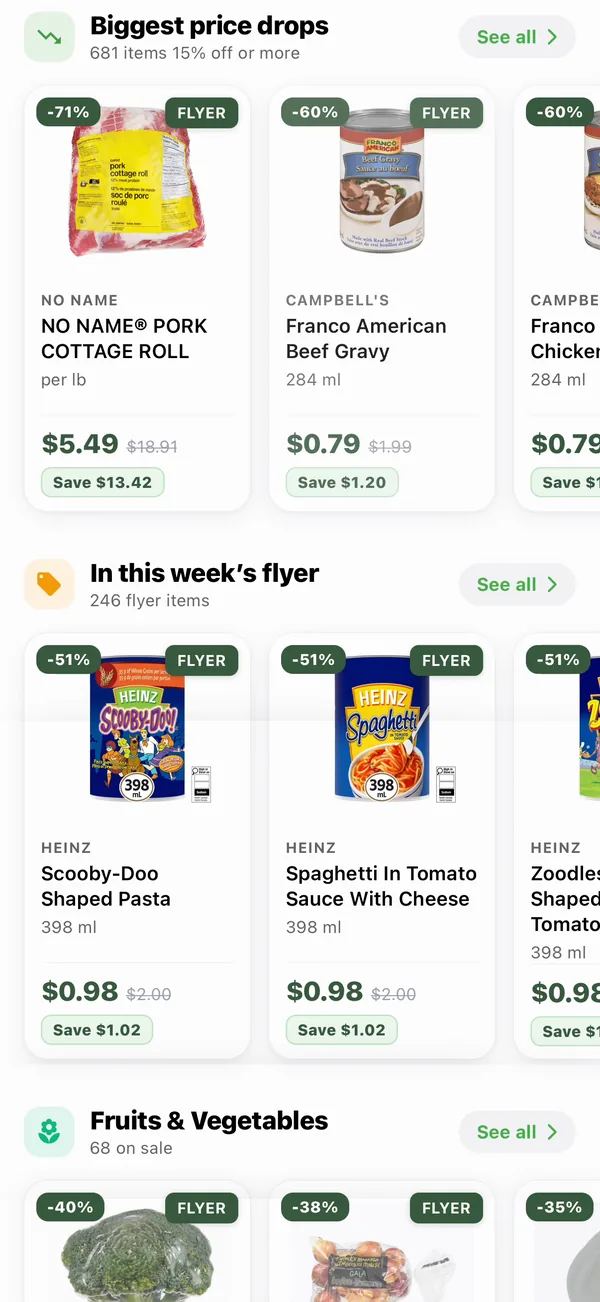
Deal Dish shows this week's flyer deals from 3,500+ Canadian grocery stores across 35 banners. When trade pressure pushes up one category, you can see which alternatives are on sale that week.
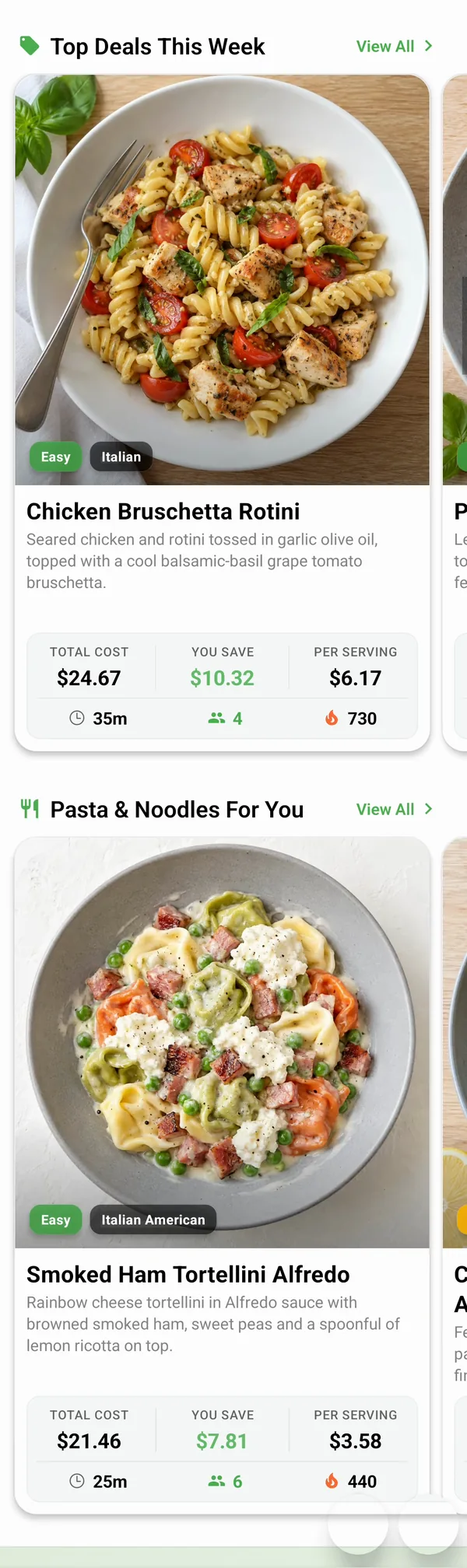
New recipes built from what's on sale arrive every Thursday, and each recipe card shows its cost per serving. In the aisle, the barcode scanner shows whether an item is on sale and what it costs at nearby stores.
See this week's grocery deals and swaps in one app. Get Deal Dish free on the App Store.
Put this into practice
Deal Dish is a free app for iPhone, iPad and Android that collects weekly flyer deals from 3,500+ Canadian grocery stores. The same team writes these guides.