The GST/HST Credit Is Changing in 2026: What Canadians Need to Know
The GST/HST credit becomes the Canada Groceries and Essentials Benefit in July 2026, with payments up 25% for five years and a one-time top-up from June 5.
If you get the GST/HST credit, your quarterly payment is changing in 2026. The federal government is renaming and temporarily boosting the existing credit, so there's no separate program to apply for.
Starting July 2026, the GST/HST credit becomes the Canada Groceries and Essentials Benefit (CGEB), and quarterly payments go up 25% for five years (CRA). Before that, eligible Canadians also get a one-time top-up tied to the old credit, issued starting June 5, 2026 (CRA).
Here's what that means for your bank account: the dates, the amounts, and the few things you may need to do so the money lands.
What the CGEB is
The Canada Groceries and Essentials Benefit replaces the GST/HST credit starting in July 2026. The amount goes up by 25% and stays there for five years, from 2026 to 2031 (CRA).
For most people, it isn't a new program you sign up for. When you file your taxes, you're automatically considered for the benefit, the same way you were for the GST/HST credit.
Finance Canada says the new benefit will help more than 12 million low- and modest-income Canadians. It estimates the 25% increase will deliver $8.6 billion in added support from 2026–27 to 2030–31, including to 500,000 new individuals and families (Finance Canada).
What happens in June 2026
Before the CGEB takes over, there's a separate one-time GST/HST credit top-up (CRA):
- Issued: starting June 5, 2026.
- Who gets it: people who filed a 2024 tax return and were entitled to the GST/HST credit in January 2026.
- How much: 50% of your total annual GST/HST credit for July 2025 to June 2026.
- What it's based on: your 2024 adjusted family net income and your family situation in January 2026.
The CRA's maximum top-up amounts include:
- $267 for a single person with no children.
- $349 for a married or common-law couple with no children.
- Higher amounts for families with children (for example, $533 with two children).
One note for when you check your bank app: the CRA says the top-up appears as a GST/HST credit on your notice, and possibly on your bank statement if you use direct deposit (CRA). That label is expected, because the top-up is paid before the CGEB starts.
What changes in July 2026
From July 2026 onward, the quarterly payment is the Canada Groceries and Essentials Benefit. The first two CGEB payment dates are (CRA):
- July 3, 2026
- October 5, 2026
The January 5 and April 2, 2026 payments were made as GST/HST credit payments, before the CGEB took over.
For the benefit year July 2026 to June 2027, the CRA's maximum annual amounts are (CRA):
- $679 for a single individual
- $890 if you're married or have a common-law partner
- $234 for each eligible child under 19
Those are annual maximums, paid quarterly. What your household actually gets depends on adjusted family net income and family situation, the same mechanics as the GST/HST credit.
Unlike the top-up, the CGEB uses your 2025 tax return to set your payments for July 2026 to June 2027.
Two tax returns, two payments
To keep the two payments straight:
- The one-time top-up (issued starting June 5, 2026) is based on your 2024 tax return plus your family situation in January 2026.
- The CGEB quarterly payments (starting July 3, 2026) are based on your 2025 tax return.
If the matching return isn't filed, that payment won't arrive.
Who should pay attention
The CGEB follows the same eligibility rules as the GST/HST credit. If you get the GST/HST credit now, the CGEB will typically apply to you automatically. The core rules (CRA):
- You're a resident of Canada for tax purposes in the month before a payment and at the start of the month it's paid.
- You're at least 19. If you're under 19, you must have (or have had) a spouse or common-law partner, or be (or have been) a parent living with your child.
- Your adjusted family net income affects whether you qualify and how much you get.
You're most likely to benefit if you:
- Already receive the GST/HST credit.
- Have a low or modest income and file taxes, but have never checked whether you qualify.
- Are a new resident of Canada who isn't in the CRA system yet.
In most cases you don't need to apply separately. You do have to file a 2025 tax return. Newcomers to Canada who want the CGEB send Form RC151 (CRA).
How much you could get in 2026
Finance Canada published two examples that include both the one-time top-up and the new CGEB payments (Finance Canada):
- A couple with two children and $40,000 in net income would receive $1,890 for the 2026–27 benefit year, including a $533 top-up.
- A single senior with $25,000 in net income would receive $950 for the 2026–27 benefit year, including a $267 top-up.
Your amount will differ with family size and adjusted family net income.
The GST/HST credit becomes the Canada Groceries and Essentials Benefit in July 2026, and payments go up 25% for five years. Before that, eligible recipients get a one-time top-up starting June 5, 2026, equal to 50% of their GST/HST credit for July 2025 to June 2026. For most Canadians, filing taxes is the only step.
Why you may not get paid
The CRA lists reasons CGEB payments can stop or change (CRA):
- You didn't file your tax return.
- You didn't respond to a CRA letter, or didn't update your address or bank account.
- Your marital status changed.
- Your income is now too high (the CRA recalculates every July).
- You no longer meet the residency rules.
- The payment was applied to benefit overpayments or other government debts.
If you have a spouse or common-law partner, only one of you gets the benefit for both. It's usually paid to the partner whose return is assessed first (CRA).
For the one-time top-up, the CRA lists four reasons you may not have received it (CRA):
- You didn't file your 2024 tax return.
- You weren't entitled to the GST/HST credit in January 2026.
- Your spouse or common-law partner received it instead.
- The amount was applied to a CRA debt.
If a payment doesn't arrive when you expect it, check these first.
What Canadians should do now
For most people, the list is short:
- File your taxes on time. The one-time top-up needs your 2024 return. The CGEB payments starting July 2026 need your 2025 return.
- Check your direct deposit details. A current bank account on file means the money lands automatically instead of arriving as a mailed cheque.
- Check your CRA account information. Log in to My Account and confirm your address, marital status and number of children. Changes in family situation can change the amount.
- Know which partner receives the family payment. If the benefit is paid to your partner, that's normal, not a missing payment.
- Look into Form RC151 if you're new to Canada. Don't assume you're already in the system.
If you're unsure whether you qualify, file your taxes. The CRA uses the return to decide eligibility automatically.
Final takeaway
The Canada Groceries and Essentials Benefit is the GST/HST credit with a new name and a 25% increase for five years. Eligibility rules carry over, and people already getting the GST/HST credit receive a one-time top-up in June 2026.
For most Canadians, the steps are the ones you already know: file your taxes, keep your CRA details up to date, and watch for the payments.
How Deal Dish helps
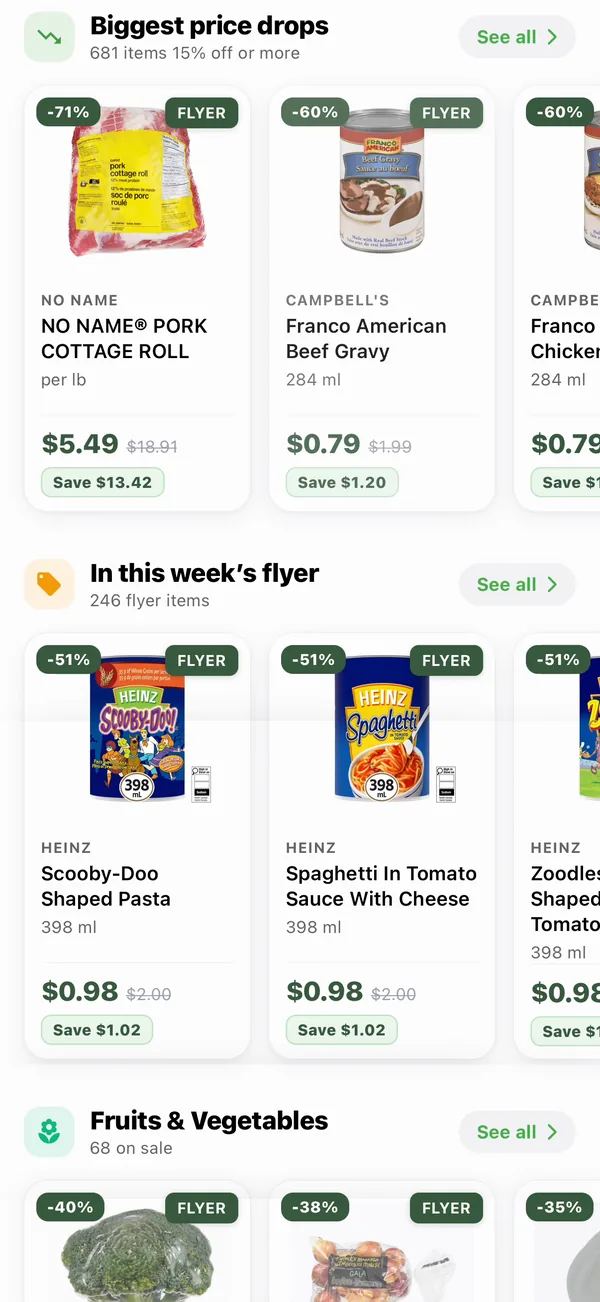
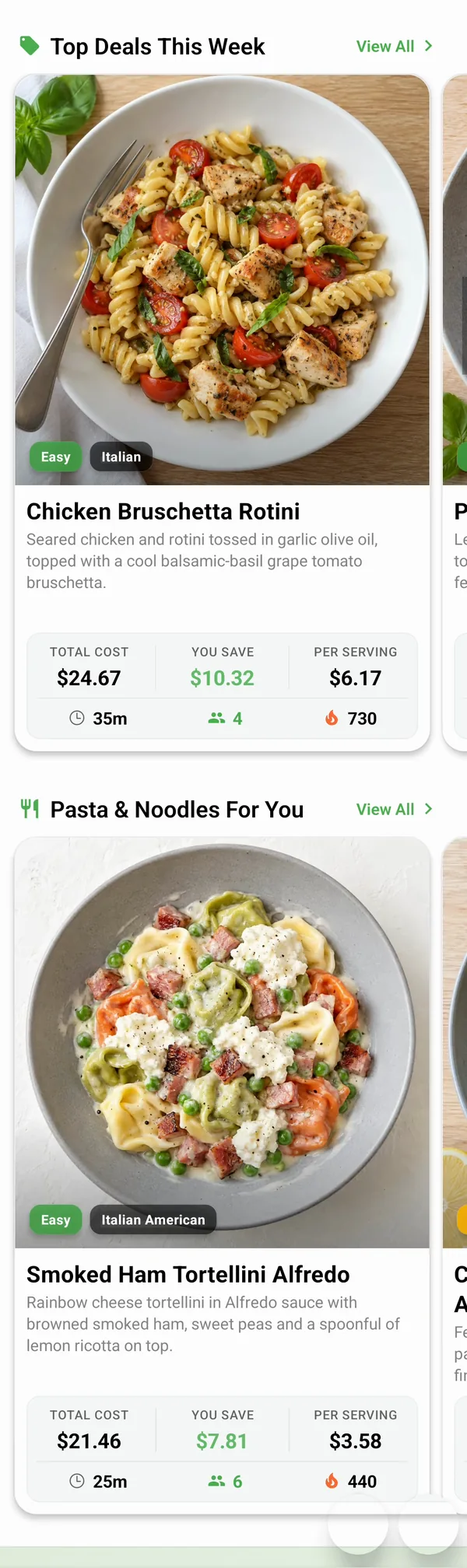
Deal Dish doesn't administer any federal benefit. It's a free app for iPhone, iPad and Android that shows this week's flyer deals at 3,500+ Canadian grocery stores across 35 banners. It builds recipes from what's on sale, shows each recipe's cost per serving, and turns the recipes you pick into a shopping list.
This article is a consumer guide, not tax or legal advice. The Canada Revenue Agency is the authoritative source for eligibility, payment amounts and timing. Before acting on any of the above, confirm the details with the CRA at canada.ca.
Download Deal Dish free on the App Store and see this week's grocery deals near you.
Put this into practice
Deal Dish is a free app for iPhone, iPad and Android that collects weekly flyer deals from 3,500+ Canadian grocery stores. The same team writes these guides.