The Strait of Hormuz and Your Grocery Bill: How Middle East Tensions Hit the Checkout
Hormuz shipping nearly stopped in late February 2026. How an oil shock reaches Canadian grocery prices, and how to shop around it.
The Strait of Hormuz is a narrow channel between Iran and Oman that handles about 20% of the world's daily crude oil flow. When traffic through it stops, as it did in March 2026, the cost reaches Canadian fuel prices within weeks and grocery shelves over the months that follow.
Middle East headlines do reach the checkout, but more slowly and unevenly than the news cycle implies. Here's the path from a stalled tanker to a higher price on a bag of Canadian flour, and what you can do about it.
What's happened in 2026
War broke out in the Middle East at the end of February 2026 and closed the Strait of Hormuz to most traffic. By March 2 there were zero active tanker transits, and marine insurers began cancelling war-risk cover for the Gulf from March 5.
Canadian fuel prices followed. According to Kalibrate, retail diesel rose 67.4 cents a litre in March to 236.7 cents, and gasoline rose 41.1 cents to 182.9 cents. The crude input price at Canadian refineries rose roughly 65% over the month.
Food prices were already climbing. Food bought from stores was up 4.1% year over year in February, more than double the 1.8% headline inflation rate.
Energy shocks don't hit every food category equally. But higher fuel prices flow into freight, packaging and processing costs, and from there into wholesale and retail food prices. Even if tensions ease, the costs already in the system take time to work through.
Why the strait matters to a loaf of bread
Food and oil are linked in several places most shoppers never see. The links aren't all the same strength, and they don't all hit on the same timeline.
Fertilizer and farm inputs
Nitrogen fertilizer is made from natural gas, and potash and other inputs move by diesel-powered freight. When energy prices climb, the next crop costs more to grow. That feeds into grain, oilseed and feed prices over the following seasons.
Farm operations
Tractors, combines, irrigation pumps and grain dryers run on diesel. Higher on-farm diesel prices raise costs for Canadian grain, oilseed and livestock producers, and some of that cost eventually shows up in wholesale prices.
Processing and manufacturing
Flour mills, meat plants, refrigerated warehouses and packaging factories use a lot of electricity and natural gas. Industrial energy costs flow into wholesale food prices with a lag of several months.
Freight
Groceries move from farm to processor to distribution centre to store on diesel trucks. Refrigerated (reefer) trucks burn extra fuel to keep loads cold. Imports from overseas, like olive oil from Europe or coffee from Brazil, carry fuel surcharges that reprice when crude moves.
Sustained diesel increases can work their way into packaged food prices over a period of months. The pass-through varies by category and by retailer.
Which categories feel it first
Not every aisle reacts at the same speed. In general:
First to move: imported fresh produce, such as strawberries, grapes, citrus, avocados and peppers. It travels by refrigerated truck from the U.S. and Mexico or by air from further away, and fuel surcharges reprice often.
Next: refrigerated and freight-heavy foods, such as fresh meat, dairy, bread and packaged dry goods. Manufacturers pass higher freight costs through with a lag.
Later: processed foods with energy-intensive distribution and packaging. Package changes often land here as manufacturers absorb some of the cost and pass along the rest.
Longest lag: Canadian-grown grains and pulses. The crop is already planned, so higher costs show up in later seasons' wheat, oat and lentil prices. Beef and pork also respond slowly, because feed costs work through the livestock cycle.
So you'll feel the pressure on imported produce first, on centre-aisle packaged goods next, and, if high oil prices persist, on grains and meat later.
Why Canadian shoppers are partly exposed and partly protected
Canada doesn't depend on Gulf food imports for most staples. The main channels are energy, freight, fertilizer and currency.
That means domestic staples tend to hold up better than imported fresh produce. Canadian wheat, oats, potatoes and pulses keep moving on domestic rail and truck networks even when ocean freight gets more expensive. Imported winter berries can't.
The categories most exposed to an oil shock are often the same ones where a Canadian-grown or frozen substitute already costs less. Oil shocks widen that gap.
What to actually watch
You don't need to track Brent crude. Two signals are easier to follow:
Retail diesel price. It's posted at most Canadian gas stations, and it's what the freight industry actually pays, so it's a more direct signal than crude.
The Canadian dollar against the U.S. dollar. A weaker loonie makes U.S.-priced imports cost more. So far in 2026 the loonie has held up: it averaged about 73 U.S. cents in February and March, against about 70 cents in early 2025 (Bank of Canada). That has cushioned some of the oil shock on imported food.
Neither signal predicts shelf prices exactly. Pass-through is uneven across retailers and categories.
Habits that cushion oil-driven food inflation
The habits that protect you from oil shocks are the same ones that protect you from shrinkflation and ordinary weekly price swings.
Shift toward lower-freight categories
Foods that take less diesel to reach your fridge:
- Canadian-grown staples: flour, oats, potatoes, root vegetables, pulses and frozen vegetables packed in Canada. Short supply chains, less exposure.
- Dairy and eggs: domestic production under supply management.
- Chicken and pork at sale prices: shorter, more domestic supply chains than many imported alternatives.
Buy proteins in their sale weeks
Flyer sales on meat still happen when costs rise. Track which proteins are on sale and batch-cook. (A chest freezer helps.)
Expect imported fresh produce to take the biggest hit
Berries, grapes, avocados and imported greens are the most exposed to fuel costs. Three options:
- Seasonal substitution. Apples, pears and citrus in winter; rhubarb and greenhouse cucumbers in spring; local berries and stone fruit in summer; storage crops and brassicas in fall.
- Frozen. Frozen berries and vegetables are already packed, so they're a steady fallback. Compare unit prices against fresh.
- Pay the premium on the imported items you care about most. It's cheaper than trying to substitute everything.
Watch for the second wave on packaged goods
Manufacturers don't raise prices every time fuel moves. They can bundle several cost increases into one "new recipe" or package redesign. Watch for smaller packages, "new recipe" labels and ingredient swaps in the categories you buy most.
Unit pricing catches these. (Our shrinkflation guide covers the tricks.)
Don't panic buy
When headlines flare up, it's tempting to stockpile. A better move is to shift some of what you cook toward Canadian-grown and frozen staples, watch unit prices, and let whatever's on sale drive the week.
Canada's Food Price Report 2026 forecasts food prices rising 4% to 6% this year, with a family of four projected to spend $17,571.79 on food. Even if Middle East tensions ease, higher freight costs can keep flowing into grocery prices for months. Budget for the upper half of that range on imported and freight-heavy categories, and shift part of your basket toward Canadian-grown and frozen staples.
The bigger picture
Geopolitical shocks don't have to throw your household budget into chaos. Canada is a large net exporter of wheat, canola and pulses: in 2024–25 it exported 29.2 million tonnes of wheat and imported 85,000 (Agriculture and Agri-Food Canada).
Most of the Hormuz exposure flows through freight, fertilizer and energy, not direct imports of affected goods. So substitution works: you can shift your basket away from the hardest-hit categories without reorganizing your whole diet.
How Deal Dish helps
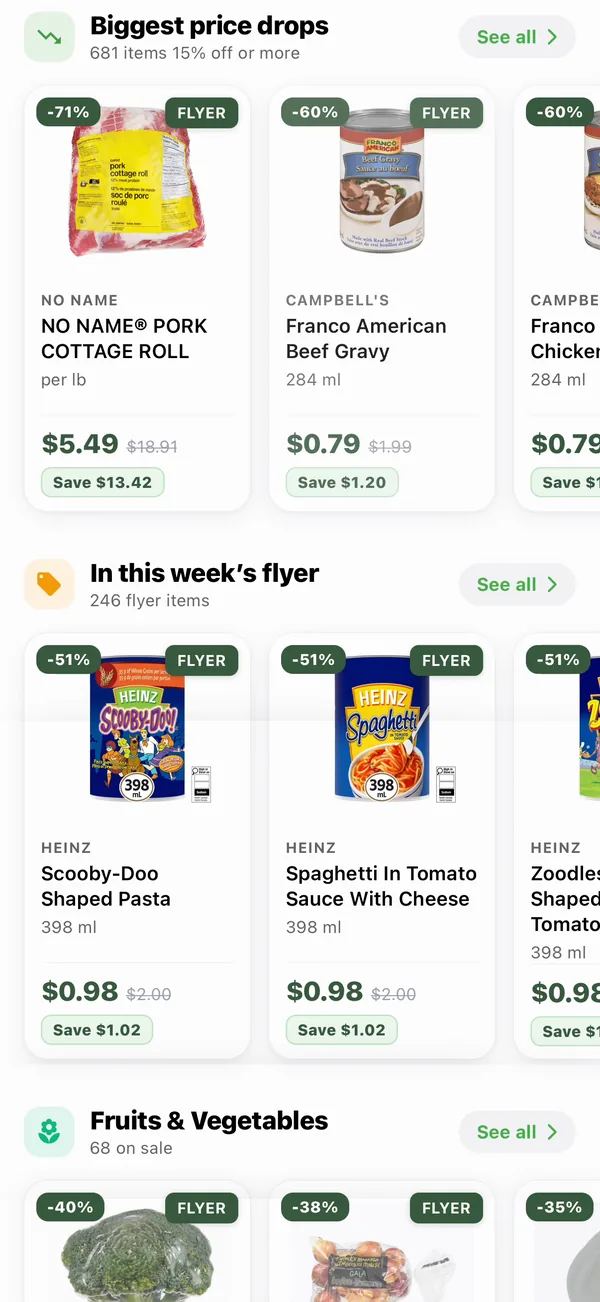
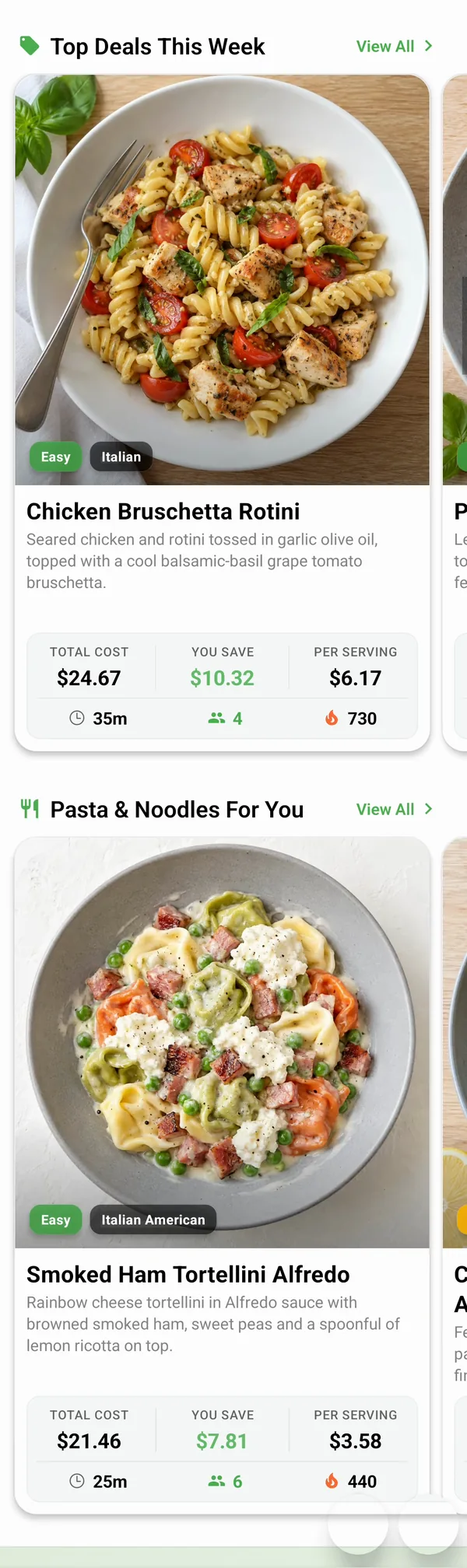
Deal Dish shows this week's flyer deals from 3,500+ Canadian grocery stores across 35 banners. New recipes built from what's on sale arrive every Thursday, and each recipe card shows its cost per serving.
When freight costs push up one category, you can see which proteins and produce are still on sale that week and plan around them.
See this week's grocery deals from 35 Canadian banners. Get Deal Dish free on the App Store.
Put this into practice
Deal Dish is a free app for iPhone, iPad and Android that collects weekly flyer deals from 3,500+ Canadian grocery stores. The same team writes these guides.