Spring 2026 Produce Guide: What's Actually in Season (and Cheap) in Canada
A month-by-month guide to the produce Canada grows in spring, when each crop peaks, and how to build your meals around it while it's in season and local.
Spring can be an expensive stretch for produce in Canada. Ontario field crops haven't started, so much of the produce wall is imported, and food bought from stores cost 4.1% more in February 2026 than a year earlier.
There are still good buys: Canadian storage crops, greenhouse produce, and a few imports that hit their cheapest window in spring.
This guide follows Ontario seasons, using Foodland Ontario's availability guide. Timing varies across Canada, so adjust the month-by-month sections for where you live.
Prices below are Statistics Canada's national average retail prices for February 2026, the latest month available when this guide was written. Your store's flyer prices will differ.
A quick distinction before the specifics, because "in season" gets used loosely:
- Local field-grown Canadian produce: short seasons, cheapest when the harvest arrives.
- Canadian greenhouse produce: grown year-round, so supply is steady.
- Imported produce: sometimes in its own cheap window, often not.
Here's what's in season in Canadian grocery stores through April, May and June 2026, and what it costs.
The April 2026 baseline
What costs more right now:
- Bell peppers: $8.87/kg on average in February.
- Grapes: $7.07/kg.
- Imported lettuce: $3.68 for a head of iceberg, $4.18 for romaine.
- Avocados: $1.87 each.
- Fresh strawberries: $4.19 for 454 g in February. Prices usually fall as California supply ramps up in spring (more on that below).
What's cheaper per kilogram:
- Potatoes: $4.45 for a 4.54 kg (10 lb) bag, under $1/kg.
- Cabbage: $2.51/kg.
- Carrots: $3.62 for a 1.36 kg (3 lb) bag, about $2.66/kg.
- Onions: $4.40 for a 1.36 kg bag, about $3.24/kg.
- Oranges: $3.55/kg, cheaper per kilogram than apples ($5.65/kg) or pears ($5.63/kg).
- Bananas: $1.84/kg.
Greenhouse tomatoes ($6.07/kg) and cucumbers ($2.21 each) aren't the cheapest items, but they're grown in Canada year-round, and tomato prices held steady from January ($6.13/kg) to February.
The month-by-month cheat sheet
April: the transition month
Canadian-grown:
- Greenhouse cucumbers and tomatoes
- Storage apples (Honeycrisp, Gala, Empire)
- Storage root vegetables: potatoes, carrots, onions, parsnips
- Cabbage
- Rhubarb: Ontario's forced (indoor) rhubarb runs March to May, and field rhubarb starts in April
Best imported value:
- Navel oranges, at $3.55/kg in February
- Bananas, mostly from Guatemala and Costa Rica
- Mangoes. Mexico's southern growing regions peak from early April to mid-May.
Pay the premium only if you want them:
- Bell peppers
- Grapes
- Imported asparagus, until Ontario's crop arrives in May
May: Canadian produce starts to arrive
New arrivals:
- Asparagus: in season in Ontario in May and June. The harvest usually starts in early May and runs six to eight weeks.
- Rhubarb: Ontario field rhubarb runs April to June.
- Radishes: Ontario radishes start in May.
- Spinach: Ontario spinach starts in May.
Continuing:
- Greenhouse cucumbers, tomatoes and lettuce, all grown in Ontario year-round.
- Storage apples and root vegetables.
- Mangoes, through Mexico's spring peak.
Watch for a gap:
- Cabbage: Foodland Ontario lists no Ontario cabbage in May. It's back in June.
June: summer produce starts to arrive
New arrivals:
- Strawberries: Ontario field strawberries start in June and traditionally peak in mid to late June. Day-neutral varieties now stretch the season into the fall.
- Peas, green onions and field leaf lettuce: Ontario supply starts in June.
- Cherries: California cherries run from mid-May into early June. The BC harvest generally starts around the third week of June.
New potatoes come later: Ontario's early potatoes arrive in early to mid July.
By late June, Ontario field crops cover much more of the produce wall.
The three spring vegetables worth designing meals around
If you want to anchor your spring grocery spending in something cheap, these three cost the least per kilogram of the vegetables StatCan prices by weight:
Potatoes
$4.45 for a 10 lb bag on average, under $1/kg. Roast, mash, bake, or cube them into soups and hashes. They keep for weeks in a cool, dark place.
Cabbage
$2.51/kg on average. It becomes coleslaw (lemon, oil and salt), a stir-fry base, cabbage-and-lentil soup, stuffed cabbage, a quick pickle or roasted wedges. Buy it in April, before Ontario's May gap.
Carrots
$3.62 for a 3 lb bag on average. Roast them whole (olive oil and salt, 400°F for about 40 minutes), cube them for soups, grate them for salads and slaws, or serve them raw with hummus. They last weeks in the fridge.
Together, those three plus a protein and a grain make several low-cost dinners a week.
Spring fruit: what's cheap and when
Spring fruit has a few clear buys:
- Bananas: $1.84/kg in February, cheaper per kilogram than apples, oranges, pears or grapes.
- Oranges: $3.55/kg, the cheaper choice over apples ($5.65/kg) in early spring.
- Apples: Ontario storage apples are available year-round. Watch for flyer sales, and compare bag and loose unit prices.
- Mangoes: at their Mexican spring peak through mid-May.
- Rhubarb: local from April, and it makes compote, crisp and sauces.
A note on spring strawberries
Fresh strawberries are often cheapest in spring, before Ontario's crop. In 2025, StatCan's national average for a 454 g container fell from $4.77 in January to $3.04 in April and $2.90 in May, then rose to $3.36 in June.
Frozen strawberries held between $4.77 and $5.04 for 600 g all spring. That's about $8 a kilogram, more than fresh cost in April and May ($6.40–6.70/kg).
So in April and May, compare unit prices: fresh imported berries can beat frozen. Buy frozen for cooking and smoothies when fresh prices climb, and look for Ontario field berries from mid-June.
What the 2026 import picture looks like
Imports face a mixed picture this spring:
- Freight and fuel costs feed into the price of anything trucked from the U.S. and Mexico.
- The loonie is a little stronger than a year ago: it averaged about 73 U.S. cents in February 2026, against about 70 cents in early 2025 (Bank of Canada). That helps on U.S.-priced produce.
- Canada removed its counter-tariffs on U.S. goods covered by CUSMA, food included, effective September 1, 2025. Produce isn't directly tariffed on the Canadian side now, but freight, packaging and logistics costs remain.
The result: Canadian storage crops cost a fraction of imported fresh produce per kilogram. Shifting part of your weekly produce shopping toward them pays off.
The spring bridge basket
Until summer field produce arrives, the cheapest produce basket leans on storage crops, greenhouse items and frozen. A practical list:
- Potatoes, carrots, onions and cabbage: Canadian storage crops, the cheapest per kilogram.
- Apples: Canadian-grown and available year-round.
- Greenhouse cucumbers, tomatoes and lettuce: grown in Canada year-round.
- Frozen vegetables: available year-round.
- Rhubarb from April.
These cover most of your weekly produce needs for less than imported fresh. Peppers cost $8.87/kg in February, against $2.66/kg for carrots.
If it's imported and perishable (peppers, grapes, imported lettuce), it usually costs more per kilogram until local crops arrive. If it's grown in Canadian greenhouses (cucumbers, tomatoes, lettuce) or comes out of storage (apples, carrots, potatoes, cabbage), it's steadier and often cheaper. Build most of your spring produce basket from the second group, and check strawberry unit prices against frozen.
A sample spring week
Here's one week's produce base at StatCan's February 2026 national average prices:
- 1 kg cabbage: $2.51
- 4 cucumbers: $8.84
- 3 lb bag of carrots: $3.62
- 10 lb bag of potatoes: $4.45
- 3 lb bag of onions: $4.40
- 1 kg tomatoes: $6.07
- 1 kg apples: $5.65
- 3 lb bag of oranges: $5.11
- 1 kg bananas: $1.84
- 600 g frozen strawberries: $5.22
Total: $47.71. Flyer sales can bring that lower. For comparison, 1 kg of peppers and 1 kg of grapes alone came to $15.94.
Planning for the summer pivot
The best reason to shop seasonally in spring is that summer produce is coming. Ontario strawberries, peas and leaf lettuce arrive in June. New potatoes and garlic follow in July, along with corn, peppers, zucchini and stone fruit through the summer (Foodland Ontario).
Spending less on produce in April and May leaves room in the budget for summer's local crops.
How Deal Dish helps
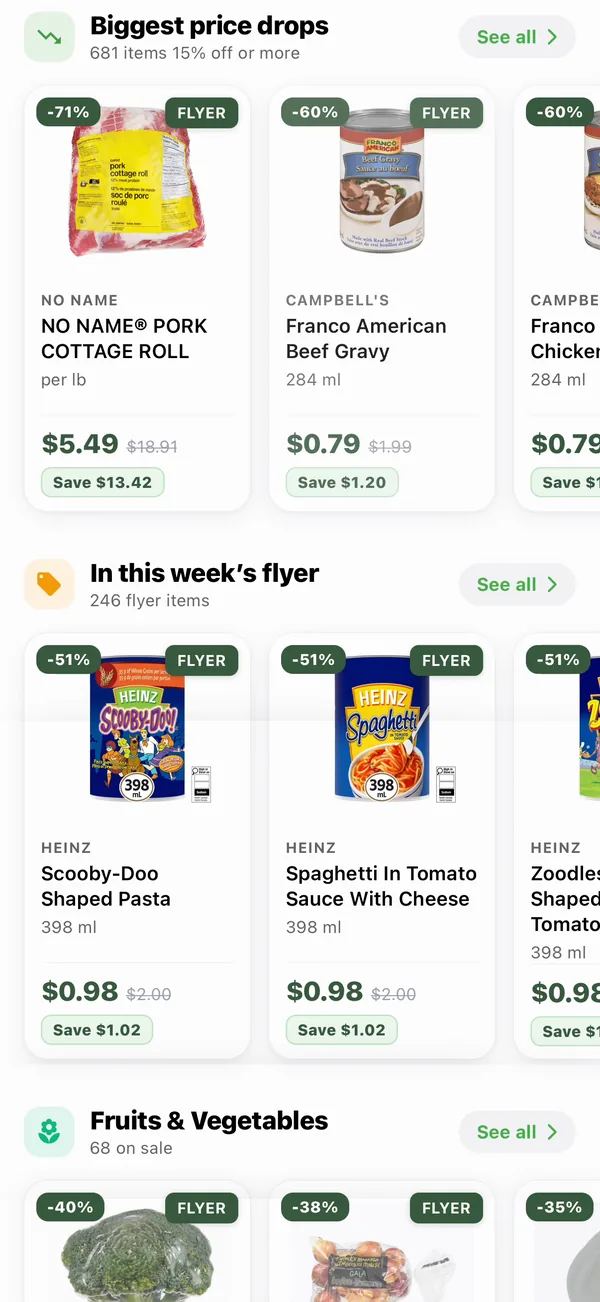
Deal Dish shows this week's flyer deals from 3,500+ Canadian grocery stores across 35 banners, produce included.
It builds recipes from what's on sale and shows each recipe's cost per serving. When Ontario asparagus or strawberries hit the flyers, you can plan meals around them and add them to your shopping list.
See which produce is on sale near you this week. Download Deal Dish free on the App Store.
Put this into practice
Deal Dish is a free app for iPhone, iPad and Android that collects weekly flyer deals from 3,500+ Canadian grocery stores. The same team writes these guides.