Private Label vs Name Brand: When to Pay More
No Name, President's Choice or Heinz? A category-by-category guide to when the store brand is worth it and when the name brand earns its price.
In many aisles of a Canadian grocery store you'll see the same product two or three ways: a name-brand box, a store-brand box, and sometimes a premium store-brand box priced in between.
Private label usually wins on price, and more shoppers are choosing it. NielsenIQ found that 42% of Canadians say they're buying more private-label products than ever. In the U.S., store brands reached a record 21.3% of dollar sales in 2025.
Whether a swap works depends on the category, though. With grocery prices still rising in 2026, getting each call right matters.
Here's the category-by-category breakdown for Canadian shoppers.
What private label actually is
Private label (also called store brand, generic or own-brand) is when a retailer has a product made for it and sells it under its own name. In Canada, the main private-label brands are:
- President's Choice and no name (Loblaw banners: Loblaws, No Frills, Real Canadian Superstore, Shoppers, Maxi, Independent)
- Compliments and Panache (Sobeys banners: Sobeys, Safeway, IGA, FreshCo, Foodland)
- Selection and Irresistibles (Metro)
- Great Value (Walmart)
- Kirkland Signature (Costco)
- Western Family (Save-On-Foods)
Most retailers run tiers. Loblaw has no name as its value tier, President's Choice as its standard tier, and PC Black Label as its premium tier. Metro's Selection is its value line and Irresistibles its premium line. Sobeys' premium line is Panache, formerly Sensations by Compliments.
The value tier is usually the cheapest option in the store. The premium tier usually sits between the standard store brand and the name brand on price.
Where private label usually wins
For these single-ingredient or tightly standardized staples, the store brand is usually the better buy. Compare unit prices and buy the cheapest one that meets your needs.
| Category | Reasoning |
|---|---|
| All-purpose flour | Single ingredient. Buy on price. |
| White sugar | Single ingredient. |
| Baking soda, baking powder, salt | Commodity products. |
| Plain oats (large flake / quick) | Single ingredient. Match the cut you want. |
| Frozen plain vegetables (peas, corn, broccoli) | Single ingredient, no sauce or seasoning. |
| Canned tomatoes (whole, diced, crushed) | Check for added salt or basil, then buy by can size and price. |
| Dried pasta | Bronze-cut imports have a rougher texture. For everyday pasta, buy on price. |
| Plain yogurt (no flavours) | Compare milk fat, then buy the cheapest. |
| Eggs | Same grade standard across brands. |
| Milk | Same milk-fat levels (skim, 1%, 2%, homogenized) across brands. |
| Plain rice | Single ingredient. |
| Cooking oil (canola, vegetable) | Single ingredient. |
| Canned beans and lentils | Short ingredient lists. Compare sodium. |
For these, the quality gap is usually small and the price gap is reliable. A blind taste test at home will tell you whether your household notices.
Where generic is cheaper but slightly different
These store brands are cheaper and a little different from the name brand. Try them and see whether the difference matters to you:
- Cereal (most kinds): no name and PC corn flakes, bran flakes, shredded wheat and O-shaped cereals cost less than the name brands. Kids' cereals are the exception, where the character on the box can matter more than the food.
- Crackers (basic varieties): store-brand wheat crackers and butter crackers are close to the originals.
- Frozen pizza (basic cheese or pepperoni): PC and Compliments versions compete with Delissio and Dr. Oetker at a lower price.
- Ice cream: premium store-brand tubs are worth trying. At the value end, check the lid: a tub labelled "frozen dairy dessert" is a separate product category from ice cream.
- Coffee (ground or whole bean): store-brand coffee usually costs less than the name brands, and the savings matter more now. A 340 g bag of roasted or ground coffee averaged $9.35 in January 2026, up from $7.00 a year earlier.
- Frozen french fries: PC and no name fries compete with McCain and Cavendish.
- Greek yogurt: store-brand Greek yogurt usually costs less per 100 g. Compare protein and fat per serving.
- Peanut butter: PC and no name peanut butter usually cost less per gram and work the same in sandwiches and cooking.
Where name brand can still justify the premium
These products have a specific recipe that store brands don't fully copy. Private label is sometimes fine, but it won't taste the same:
- Mac and cheese (boxed): Kraft Dinner's cheese powder is hard to copy. If your household wants KD, buy it on sale.
- Ketchup: Heinz and Primo each have their own tomato-and-vinegar balance. Generic ketchup can be thinner and sweeter.
- Hot sauces (Frank's, Cholula, etc.): brand-specific recipes.
- Tortilla chips (Doritos, Tostitos): the seasoning blends are proprietary.
- Soft drinks: Coke and Pepsi have their own formulas. Generic colas taste different.
- Chocolate for eating: Cadbury, Lindt and others are hard to replace. For baking, generic is fine.
- Specific snacks: Oreo, Goldfish, Cheez-It, Pringles. Generic versions are close but not the same, so decide based on whether your household cares.
- Coffee creamers: Coffee-Mate's flavoured creamers have their own formulas that store brands don't always match.
- Specialty bread: basic white and whole wheat generics are fine. Store-brand sourdough and multigrain loaves can fall short of bakery brands.
The premium store-brand tier is underrated
The premium tiers (PC Black Label, Sobeys' Panache, Metro's Irresistibles) are each retailer's top store-brand line.
Try them in categories where you'd otherwise buy a specialty name brand: olive oil, cheese, sauces and coffee. They go on sale in the weekly flyers like everything else.
How to test private label without blowing your budget
The category guidance above is a starting point, but tastes vary by household. A low-risk approach:
- Switch one category at a time. Don't overhaul the whole cart in one trip and risk several misses at once.
- Compare unit prices, not sticker prices. A smaller private-label package at a similar sticker price isn't a win.
- Start with cooked dishes. Pasta, cereal with milk, soups and stews, baked goods. Differences tend to be smallest here. If the store brand holds up, you've locked in a permanent saving.
- Blind-test the categories you're unsure about. Have someone else serve both, hide the labels, and pick the one you prefer.
Pick one name-brand product in your weekly cart and buy the store-brand version next time. After six months you'll know several categories you can switch for good.
What about the "same factory" claim?
A common claim is that private label and name brand come from the same plants. That's sometimes true: some private-label products are made by co-packers or by the same manufacturers national brands use. But it varies by category and retailer.
Specs can differ (a different cheese blend, cracker thickness or oil), even on shared production lines. So don't assume "same factory" means an identical product. For many staples, though, the spec differences are small enough that the price gap is mostly brand premium.
Why private label matters more in 2026
Grocery inflation has made store-brand swaps more valuable. 72% of Canadians see private-label products as good value for money, according to NielsenIQ.
That doesn't make every swap a winner. It does mean careful, category-by-category testing pays off more than it did a few years ago.
How Deal Dish helps
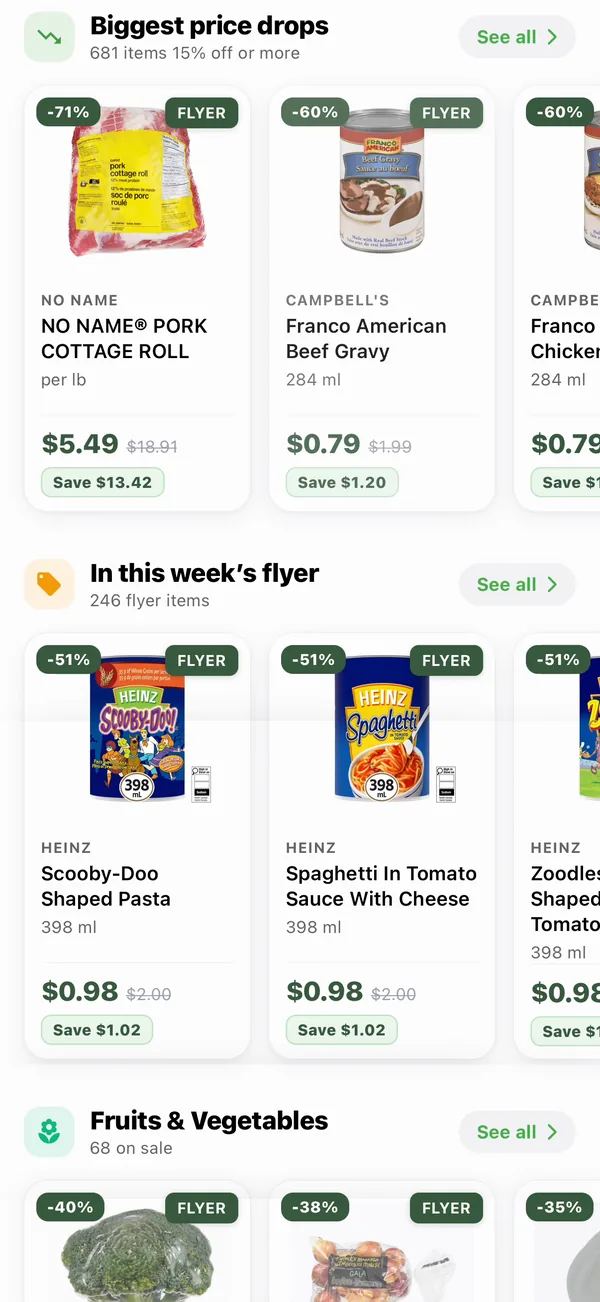
Deal Dish shows this week's flyer deals from 3,500+ Canadian grocery stores, and store brands like no name, Compliments and Selection go on sale in those flyers too.
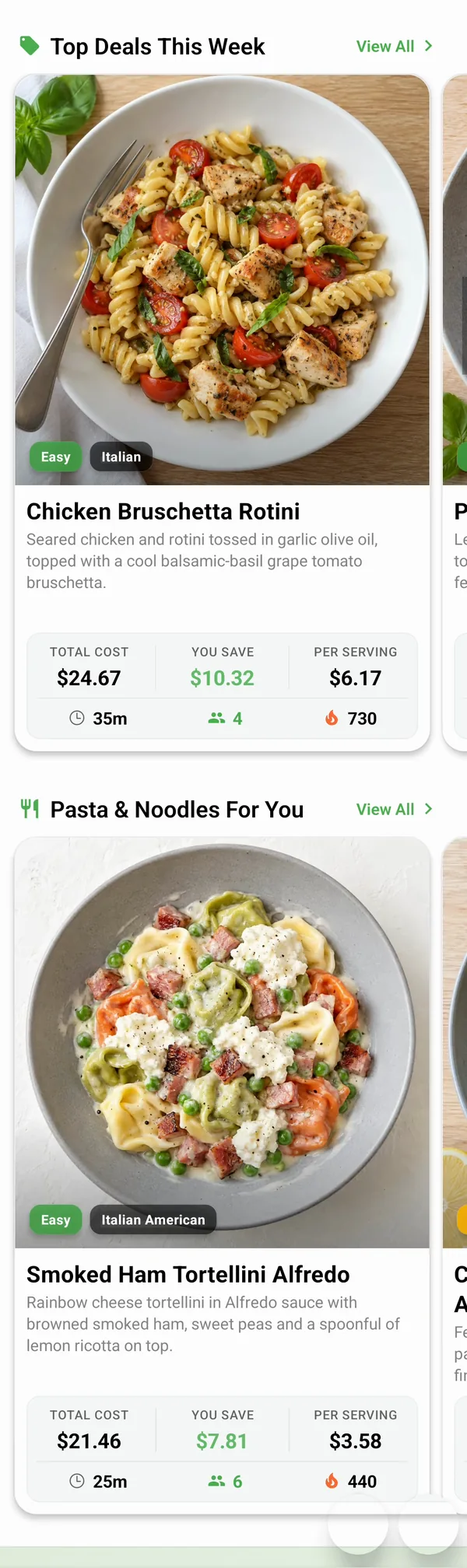
In the aisle, the barcode scanner shows whether an item is on sale and what it costs at nearby stores. Recipes are built from what's on sale, and each recipe card shows its cost per serving.
Find this week's store-brand and name-brand deals at 3,500+ Canadian grocery stores. Download Deal Dish free on the App Store.
Put this into practice
Deal Dish is a free app for iPhone, iPad and Android that collects weekly flyer deals from 3,500+ Canadian grocery stores. The same team writes these guides.